
India's fertiliser ministry has introduced a new analytical tool and a national-to-retail dashboard to monitor fertiliser dispatches, movement, and inventories in real time, aiming to prevent localised shortages and ensure equitable access for farmers.

Life Insurance Corporation of India (LIC) is facing a thinning of its top management as Managing Director Dinesh Pant exits to join Irdai, leaving one of four MD posts vacant. This comes amidst broader staffing challenges across several public sector insurers and a headless Financial Services Institutions Bureau (FSIB).

The Centre has spent 28 per cent of its FY27 capital expenditure budget of Rs 12.21 trillion in the first three months against around 24.5 per cent during the corresponding period a year ago.
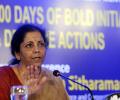
Union Finance Minister Nirmala Sitharaman expressed strong confidence in India achieving over 10 per cent economic growth, advocating for increased technology adoption and innovation. She urged overcoming scepticism and highlighted technology's transformative role in agriculture and public sector reforms, while also launching a new fund and book at an IIT Madras event.

India's statistics ministry has defended its newly released economic growth estimates, stating that revisions to last year's GDP and the divergence between different price measures reflect updated data and estimation techniques rather than an attempt to artificially boost headline growth.

Chinese President Xi Jinping concluded his three-day visit to the US, stating that his discussions with President Donald Trump had injected "new substance" into the China-US relationship. Both leaders expressed optimism for future cooperation, with agreements reached on certain trade goods and discussions held on AI capabilities.

The Automotive Research Association of India (ARAI) has launched comprehensive conformity assessment and certification services for drone manufacturers, aiming to streamline the type approval process for Unmanned Aerial Systems (UAS) in India. This initiative supports the rapidly expanding drone sector by ensuring design, quality, and performance meet evolving safety and airworthiness standards.

Former NITI Aayog vice-chairman Rajiv Kumar has urged the government to maintain zero-fee UPI transactions for several more years, arguing that the benefits of UPI as a public good outweigh the costs. This comes amidst the government's recent decision to introduce a 0.4% fee on person-to-merchant UPI transactions above Rs 2,000 from October 15, a move that has drawn criticism.

'These limits will change. Very soon restrictions, restrictions will come.'

Government departments are establishing Quick Response Teams (QRTs) to promptly address and counter misleading or fake content circulating on social media. These teams will monitor digital platforms, verify information, and coordinate with fact-checking units to ensure timely and accurate responses to misinformation, with some ministries already having formed their QRTs.

Trade and business associations across India are organising a 'No UPI Day' on October 2 to protest the upcoming 0.4 per cent merchant discount rate (MDR) on Unified Payments Interface (UPI) transactions exceeding 2,000, effective from October 15.

A group of experts has voiced significant concerns regarding India's ethanol-blended fuel policy, citing potential negative impacts on land-use, agriculture patterns, food security, groundwater levels, and household incomes. They recommend a return to E10 fuel and a review of the policy's overall benefits versus costs to consumers and the environment.

'If you listen to a rowdy in a class, he will keep on bullying you.' 'India can say do whatever you want. We will not compromise on anything.'

India is hosting the BRICS summit, leveraging the platform to address global trade tensions and champion the developmental priorities of the Global South, including food, energy, and supply chain security. The summit, attended by leaders like President Xi Jinping and Vladimir Putin, will focus on resilience, innovation, cooperation, and sustainability, with India aiming to strengthen intra-BRICS collaboration and discuss global matters. The expanded BRICS grouping represents a significant portion of the world's population and GDP, making its discussions crucial for global economic stability.

One of the important topics of discussion between the two leaders is expected to be the Northern Sea Route and the Chennai-Vladivostok Maritime Corridor.

BRICS nations have successfully reached a consensus on a joint statement following extensive negotiations, with India playing a crucial role in bridging differences, particularly among West Asian members like Iran, Saudi Arabia, and the UAE, despite regional conflicts and geopolitical tensions.

The Indian government has introduced a 0.4% Merchant Discount Rate (MDR) on UPI person-to-merchant (P2M) transactions exceeding Rs 2,000, effective October 15. This move ends nearly six years of fully free UPI payments, though person-to-person (P2P) transfers and small P2M payments remain free. The charges aim to bolster investment in UPI infrastructure, with specific exemptions and caps for essential sectors.

The Indian government has introduced a 0.4% transaction fee on Unified Payments Interface (UPI) payments exceeding Rs 2,000 for merchants, effective October 15, marking the end of nearly six years of free service. Person-to-person transfers and small-value transactions below Rs 2,000 remain free. The new Merchant Discount Rate (MDR) is capped at Rs 300 for transactions above Rs 75,000, with differentiated rates for essential sectors and investments, and safeguards to prevent costs from being passed to consumers.

The BRICS summit in New Delhi brings together leaders from major emerging economies to address global challenges like trade disputes, geopolitical upheavals, and the economic impact of conflicts in Ukraine and West Asia. India, as chair, aims to position BRICS as an economic growth engine, focusing on the Global South's food, energy, and supply chain security. The summit also highlights the grouping's expansion and its growing influence in global governance.

India's urban unemployment rate for individuals aged 15 and above marginally increased to 6.7 per cent in April-June, while rural unemployment rose to 4.8 per cent, according to the latest Periodic Labour Force Survey (PLFS). This rise in unemployment coincides with a notable decline in the overall labour force participation rate (LFPR) to a five-quarter low of 54.6 per cent.

Nepal has launched a diplomatic initiative to secure climate-related compensation from major greenhouse gas emitters, asserting that post-disaster assistance for recent deadly flash floods should be viewed as a moral and legal liability, not charity. Foreign Minister Shisir Khanal highlighted Nepal's disproportionate suffering from global warming despite negligible emissions, citing rapid glacier melt and extreme mountain disasters. The country has formally approached the Loss and Damage Fund board for urgent financial aid following a catastrophic flash flood in the Bhotekoshi river basin.

Prime Minister Narendra Modi cautioned against the 'weaponisation' of technology and critical minerals at the BRICS summit, advocating for cooperation to foster shared prosperity. Concurrently, Chinese President Xi Jinping announced plans for an open-source AI ecosystem for BRICS nations, positioning Beijing as a key technology partner amid global AI competition.

Why the industry's public position changed is difficult to say. What the developments did establish, though, is that ethanol-blended petrol has become one of the country's most politically and commercially sensitive policy issues.

The Centre has reviewed the monsoon situation, noting a reduced rainfall deficit and ongoing preparedness for the kharif season amidst El Nino concerns. A high-level meeting chaired by the Principal Secretary to the Prime Minister discussed measures across various sectors, emphasising continuous monitoring and coordinated action to mitigate potential impacts on agriculture, water resources, and essential commodities.

India's public sector banks (PSBs) have seen their net profit nearly treble over the past five years, reaching a record Rs 1.98 trillion in FY26, driven by significant improvements in asset quality and sustained lending growth across key economic sectors.

A government adviser has called for India to reintroduce a petrol variant with a lower ethanol blend, such as E10, alongside the current E20 fuel. This move aims to protect millions of older vehicles, particularly two-wheelers, which may experience performance issues and damage from the higher 20 per cent ethanol blend.

Chief ministers from southern states convened at the Southern Zonal Council meeting in Kovalam, where Karnataka CM DK Shivakumar advocated for the 1971 census as the basis for delimitation and a freeze on Lok Sabha seats, while also addressing the contentious Cauvery water and Mekedatu dam issues.

Union Finance Minister Nirmala Sitharaman announced the government's plan to establish a high-powered committee to examine reforms for the banking sector, aligning it with the vision of a 'Viksit Bharat' (Developed India) and India's next phase of growth.
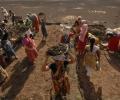
The Indian government has identified 111 districts as 'most vulnerable' to crop damage due to a 43 per cent monsoon deficit, driven by El Nino, which threatens kharif sowing. Agriculture Minister Shivraj Singh Chouhan stated that weak monsoon conditions are expected to persist until July 2, prompting contingency plans and recommendations for alternative, less water-intensive crops.

A Parliamentary Standing Committee on Commerce has urged the Indian government to swiftly conclude the proposed India-US Bilateral Trade Agreement (BTA), while ensuring India's interests are protected, recommending complete exemption for key export products like generic medicines and smartphones from future US tariff increases.

The Indian government has approved the introduction of one billion polymer banknotes in Rs 10 and Rs 20 denominations for field trials, aiming to enhance durability. This move comes as the Finance Minister also addressed Parliament on declining retail inflation, GST reforms, and other fiscal measures taken to support the economy and household consumption.

After a subdued start, the southwest monsoon has gathered pace since the beginning of July, narrowing the cumulative rainfall deficit from nearly 30 per cent on June 30 to around 15 per cent as of July 8.

The Indian government has dismissed concerns that the use of E20 fuel could affect the validity of vehicle insurance policies, stating that the ethanol blending programme remains safe, consumer-friendly, and economically beneficial.

India's finance ministry anticipates inflation will remain relatively contained in the coming months, supported by a correction in crude oil prices and softening input costs following the cessation of the West Asia conflict, despite earlier spikes in wholesale and retail inflation.

Prime Minister Narendra Modi lauded young Indian innovators for the country's first privately developed orbital rocket, Skyroot Aerospace's Vikram-1, which made India the third nation with private orbital launch capabilities. While praising the 28-year-old average age of the Skyroot team, Modi made a veiled remark about a "56-year-old young man," widely understood to be a dig at Congress leader Rahul Gandhi, who recently turned 56.

"Rather than worrying, preparation is required. Contingency plans will be made for affected districts and crop changes will be considered wherever necessary"

'The real shock is going to be from a deficient monsoon.'

India's wholesale price inflation (WPI) increased to 9.87 per cent in June, up from 9.68 per cent in May, primarily due to significant price increases in non-food and food products, with food inflation alone rising to 5.49 per cent.
India and the United States have reviewed progress on a proposed interim bilateral trade agreement, discussing market access, digital trade, and non-tariff barriers, as they race to finalise a deal before a temporary 10 per cent US tariff regime expires on July 24.
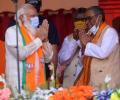
Ten days after the expansion of the BJP government's cabinet in West Bengal, key portfolios have been allocated, with senior leader Tapas Roy taking charge of industries and journalist-turned-politician Swapan Dasgupta appointed finance minister.
